~.ღஐ. .ஐღ.~
.ஐღ.~
A knight is a "gentleman soldier" or member of the warrior class of the Middle Ages in Europe.
The British legend of King Arthur was popularised throughout Europe in the Middle Ages by Geoffrey of Monmouth in his Historia Regum Britanniae ("History of the Kings of Britain"), written in the 1130s. Sir Thomas Malory's Le Morte d'Arthur ("The Death of Arthur"), written in 1485, was important in defining the ideal of chivalry which is essential to the modern concept of the knight as an elite warrior sworn to uphold the values of faith, loyalty, courage and honour.
During the Renaissance, the genre of chivalric romance became popular in literature, growing ever more idealistic and eventually giving rise to a new form of realism in literature popularised by Miguel de Cervantes' Don Quixote. This novel explored the ideals of knighthood and their incongruity with the reality of Cervantes' world.
Some orders of knighthood, such as the Knights Templar have themselves become the stuff of legends, others have disappeared into obscurity. Today, a number of orders of knighthood continue to exist in several countries, such as the Order of the Garter, the Swedish Royal Order of the Seraphim, the Royal Norwegian Order of St. Olav. Each of these orders carry their own criteria for eligibility, but knighthood is generally granted by a head of state to a selected person for some merit of achievement.
Knights of the medieval era were asked to "Protect the weak, defenseless, helpless, and fight for the general welfare of all." These few guidelines were the main duties of a medieval knight, but they were very hard to accomplish fully. Rarely could even the best of knights achieve these goals. Knights trained, inter alia, in hunting, fighting, and riding. They were also trained to practise courteous, honorable behaviour, which was extremely important. Chivalry (derived from the French word chevalier implying "skills to handle a horse") was the main principle guiding a knight’s life style.
The code of chivalry dealt with three main areas: the military, social life, and religion.
The military side of life was very important to knighthood. Along with the fighting elements of war, there were many customs and rules to be followed as well. A way of demonstrating military chivalry was to own expensive, heavy weaponry. Weapons were not the only crucial instruments for a knight: horses were also extremely important, and each knight often owned several horses for distinct purposes.
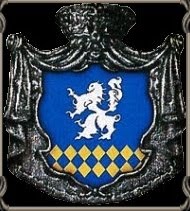
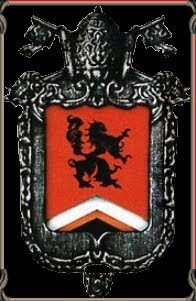
One of the greatest signs of chivalry was the flying of coloured banners, to display power and to distinguish knights in battle and in tournaments. Warriors were not only required to own all these belongings to prove their allegiance: they were expected to act with military courtesy as well. In combat when nobles and knights were taken prisoner, their lives were spared and were often held for ransom in somewhat comfortable surroundings. This same code of conduct did not apply to non-knights (archers, peasants, foot-soldiers, etc.) who were often slaughtered after capture.
Becoming a knight was not a widely attainable occupation in the medieval era. Only the sons of a knight were eligible for the ranks of knighthood. Those who were destined to become knights were singled out of society. In the years of boyhood, these future warriors were sent off to a castle as pages, later becoming squires. Commonly around the age of 20, knights would be admitted to their rank in a ceremony called "dubbing". Although these strong young men had proved their eligibility, their social status would be permanently controlled. They were expected to obey the code of chivalry at all times, and no failure was accepted.
Chivalry and religion were mutually influenced. The early Crusades helped to clarify the moral code of chivalry as it related to religion. As a result, Christian armies began to devote their efforts to sacred purposes. As time passed, clergy instituted religious vows which required knights to use their weapons chiefly for the protection of the weak and defenseless, especially women and orphans, and of churches.
The Code of Chivalry continued to influence social behaviour long after the actual knighthood ceased to exist, influencing for example the 19th Century Victorian perceptions of how a "gentleman" ought to behave.