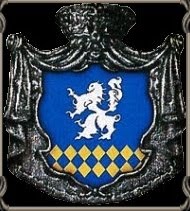
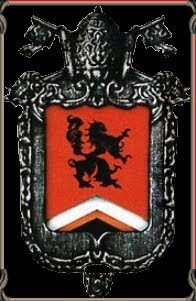
As u already know, the moment the web starts loading....yeap you guessed it right!! Blog page revamped from the good old medieval theme into something extravagant.
Having known for my versitality, I just love fusing both medieval & modern (AdvanteGarde). A perfect fusion, that what I called it. You may also find that the audio playing below are of old and modern beat, prepared so readily in conjunction with the birth of a new "page" (^-^).
In due time, the blog will explain itself. (I hope so....) Ahhh.....yes I would also like to take this opportunity to introduce my most adorable secretary, Ms. Mina-Chan. She will be handling all my archives and will definately keep the blog in its most warmest welcoming condition. Until then, the blog will grow in mysterious ways.....
Happy reading! (Comments on the revamped are most welcomed)
First of, I would like to emphasize once again that the blog was unduly created to explain my certain virtues, and the memorable people who I've met during my course of endeavors in life's most precious playgrounds, and because of that, this blog was written in honour of thier presence. It will also state the kind of elements and fundamental I truly appreciate having being a part of my life, for instance "Chilvary" or did you know that Arius loves horseriding? Did it ever occured to you that knowing him this long and his favourite sport was jousting even if there isn't any in Malaysia? Sad but true, although I don't talk about it in real life, doesn't mean I'm not into it "passionately" why if you think otherwise, then you truly haven't come to know me or have not unravel my mysteries. I realize its a bit out of the usual blog where people write what they think or personally just an opinion of sorts which is clearly written in a website. But to me thats all fine, I will get to that part sooner or later as well. But for now, I'll just utilize whats provided to explain oneself even if it meant confusion in the beginning (for that I do apologize sincerely, rome wasn't really built in a day) but well I'm trying at least (trying to explain what its all about that is). So give it some patience. When someone began to critic at certain understated phenomena in life (without a certain fact or full understanding), it is truly remarkable, but being "able" to uphold sincere patience is truly a renowned "critical" wisdom in itself when the time comes. Wouldn't you agree? P/S : To those that have encouraged me into writting and have been a joyride to some, I salute you. Maybe you and I can go a long way together ^_~. Perhaps in a distant future, I would have an opportuniy to come to know you too. *bows*
After a series of introductions with Chivalric indulgence (Historical facts, Chivalric Calvaries, and the Chivaric arts of Swordplays) in the Oracles of Chilvary Chapter I - III, it would be my utmost pleasure in presenting to you the Society of Creative Anarchronism. Now, what is the SCA?
Part 2
Fun eh?? Now for a further brief of introduction. Anachronism - (a-nakra-nzam) n. One that is out of its proper or chronological order, especially a person or practice that belongs to an earlier time.
Preparing for combat. An explanation on what is needed before engaging in a field combat.
Well the term "martial arts" today is typically synanomous with asian fighting arts. For centuries, highly sophisticated western european martial arts existed. Their effectiveness and formidability documented in accounts and chronicles was combat proven from Scandinavia to the meditterranian from spain to russia, and from the new east to the new world.
It is from the latin that we actually derived the english term martial arts from "The arts of Mars" the roman god of war. The term martial arts was itself used in regard to fighting skills as early as the 1550s to refer specifically to the arts of defense, knightly prowess in arms, or the noble science called "fencing". Fencing meant far more than just swordplay. The knightly classes of the early middle ages criscent to these skills as the chivalric arts and "The art of chivalry".
Renaissance writters describe warrior's training as the doctrina armorium the disciplina gladitorial and the art military. The essential function of such instruction was to enable a fighting man to better deal with the chaos of personal combat by preparing himself with an understanding of what was possible. For about the 12th century, professional instruction in fencing existed across western europe, by the 14th century many of these instructor in arms or master of defense became highly regarded international experts.
They systematized and thought thier fighting methods, then recorded thier craft in vast and until now relatively unknown technical literature, overtime they uniquely produced hundreds of detailed often well illustrated training manuals and study guides that still survive. But these experts in close combat were no mere fencers, thiers were a fighting systems suited to a wide range of threat and conditions over several centuries. The teaching of these master of defence involved understanding and applying key principles and concepts crucial pyshical and mental components inherent to all hand to hand combat. The weapons of dagger, stave and axes was study as vigorously as pole weapons, shield and especially all manners of swords. Grapling and unarmed wrestling technics was also vital elements of thier methods, these still little known works reveal thier craft of fighting to be one of sophisticated and systematic skills that stress fighting effectively.
Once studied from within thier own cultural contexts, these surviving works present a potrait of highly develop indeginous european martial arts. They potray intergrated self defense method focus largely on armoured and unarmored fighting on foot or mounted using a variety of weapons and empty handed techniques.
The indisputable picture of renaisance close combat, presented in the clips above is frequently one of expert warriors expertly imploying agile well balanced ingenously designed and well proven weapon with a vicious efficiency. Thiers were not slow, pondorous or ungainly tools. Today dozens of these obscure hand written manual script and printed books provide an unequal resource for modern students of historical fencing as both practical skill and scientific art. The methods of close combat from these eras had to be athletic, fierce and swift, its deadly tools were formidable, sophicated, robust, uniformlyagile and highly effective implemence. To undestand the development of these fighting arts we need only examine the medieval legacy of wars, violence and duels.
A medieval knight prepares for an empending battle at dawn. This video demonstrates how each piece of armor was designed for both protection and freedom of movement. I know someone of you have been enquiring on how does a Knight get armoured up, well this is one of the closest vids I've got to share. Enjoy!!
This chapter and so with the others (I&II) covers the basic fundamentals of Chivalry. Now surely one often asked, if I do have these qualities and I'm kinda interested to be one, just how may I fused all these into reality? The answer lies in the next post......
Jousting is a sport played by two armored knights mounted on horses. It consists of martial competition between two mounted knights using a variety of weapons, usually in sets of three per weapon (such as tilting with a lance, blows with the battle axe, strokes with the dagger, or strokes with a sword), often as part of a tournament.
Jousting was just one of a number of popular martial games in the Middle Ages referred to generically as hastiludes and took great skill to do.
Though the first recorded tournament was staged in 1066, jousting did not gain in widespread popularity until the 12th century. It maintained its status as a popular European sport until the early 17th century.
Jousting was added to tournaments several centuries after their inauguration. The joust permitted a better display of individual skill and, although dangerous, offered large sums of prize money. Many knights made their fortune in these events, whilst many lost their fortune or even life.
The skills and techniques used in jousting were also used in combat. In combat, mounted knights would charge at their enemies with weapons to try to kill or disable them. The primary use of the jousting lance was to unhorse the other by striking them with the end of the lance while riding towards them at high speed. This is known as "tilting". Other weapons were also used for jousting.
The Lists
The lists, or list field, is the arena in which a jousting event or similar tournament is held. More precisely, it is the roped-off enclosure where tournament fighting takes place.It is mentioned frequently in the novel Ivanhoe by Sir Walter Scott. In the late medieval period, castles and palaces were augmented by purpose-built tiltyards as a venue for "jousting tournaments".
The Horse
The two most common kinds of horse used for jousting were warmblood chargers and coldblood destriers. Chargers were medium-weight horses bred and trained for agility and stamina, while destriers were heavy war horses. These were larger and slower, but helpful to give devastating force to the rider's lance through its weight being about twice as great as that of a traditional riding horse. The horses were trained for ambling, a kind of pace that provided the rider with stability in order to be able to focus and aim better with the lance.
During a jousting tournament, the horses were cared for by their grooms in their respective tents. They wore caparisons, a type of ornamental cloth featuring the owner's heraldic signs. Competing horses had their heads protected by a chanfron, an iron shield for protection from otherwise lethal lance hits.
Other forms of equipment on the horse included long-necked spurs which enabled the rider to control the horse with extended legs, a saddle with a high back to provide leverage during the charge or when hit, as well as stirrups for the necessary leverage to deliver blows with the lance.
The Armour
Jousting was popular from the Middle Ages until the early 1600s. During that time armour evolved from being chain mail (called simply mail at the time), with a solid, heavy helmet, called a "great helm", and shield.
By 1400 knights wore full suits of plate armour, called a "harness". A full harness frequently included extra pieces specifically for use in jousting, so that a light military combat suit could be reinforced with heavier, "bolt-on" protective plates on the cuirass (breastplate) and helmet, and also with jousting-specific arm and shoulder pieces, which traded mobility for extra protection. These extra pieces were usually much stronger on the side expected to take the impact of the lance.
Special jousting helmets were sometimes used, made so that the wearer could only see out by leaning forwards. If the wearer straightened up just before the impact of the lance, the eyes would be completely protected. Some later suits had a small shield built-in the left side of the armour. In some cases this was spring loaded to fly into pieces if struck properly by the opponent's lance.
The Lance
In modern times, jousting is often done for show or demonstration purposes, and the lances used are usually made of light wood and prepared so that they break easily. Lances are often decorated with stripes or the colors of a knight's coat of arms. In a real joust, the lances were of solid oak and a significant strike was needed to shatter them. However, the (blunt) lances would not usually penetrate the steel. The harnesses worn by the knights were lined on the inside with plenty of cloth to soften the blow from the lance.
This is truly one of the soul touching tunes, I've ever come across. Despite having listened to other emotional relaxation type of melodies, but somehow this one is a bit particular. I'm not sure if its even in the lyrics or perhaps it is the vocalist's voice that made such an impression. It was originally written in Korean, kinda prefer that compared to this English version..... hmm issit just me or is the lyrics all sang backwards? like Master Yoda (from Star Wars), well whatever it maybe, it does takes hold of me. You know....it could also be the pionist that is playing that tune....it just stuck inside my head. Or suffice to say, I may have a sad part inside of me I wish to reveal? Maybe,.......... well I shall leave you to decide then. ^_^
Don't cry for me, how easy love has gone. Try to see, how deep my despair is Come the winds of fate and time Take all my tearful memories
Call out to thee sing your name is sweet harmony But only echoes fade away Crying breeze to thee ever moment with chiming wind Where has gone silent tears
Don't sigh for me, your hate rings false to me Try to see, the shards of history Darkness fills my heart and I Laugh loud at all that's passed us by Call out to thee sing your name is sweet harmony The wind blows endlessly
Roaming around whirling world rough breath in dark Cruel blades and tears in sorrowful days Bumming away hollow hopes wrong pray for god Where the angels has gone so I need Weep myself out gently, in a blind
Roaming around whirling world rough breath in dark Cruel blades and tears in sorrowful days Bumming away hollow hopes wrong pray for god Where the angels has gone so I need Weep myself out gently, in a blind
Please come to me, come dusk the past will flee. Try to see, the new dawn brings hope faintly
A knight is a "gentleman soldier" or member of the warrior class of the Middle Ages in Europe.
The British legend of King Arthur was popularised throughout Europe in the Middle Ages by Geoffrey of Monmouth in his Historia Regum Britanniae ("History of the Kings of Britain"), written in the 1130s. Sir Thomas Malory's Le Morte d'Arthur ("The Death of Arthur"), written in 1485, was important in defining the ideal of chivalry which is essential to the modern concept of the knight as an elite warrior sworn to uphold the values of faith, loyalty, courage and honour.
During the Renaissance, the genre of chivalric romance became popular in literature, growing ever more idealistic and eventually giving rise to a new form of realism in literature popularised by Miguel de Cervantes' Don Quixote. This novel explored the ideals of knighthood and their incongruity with the reality of Cervantes' world.
Some orders of knighthood, such as the Knights Templar have themselves become the stuff of legends, others have disappeared into obscurity. Today, a number of orders of knighthood continue to exist in several countries, such as the Order of the Garter, the Swedish Royal Order of the Seraphim, the Royal Norwegian Order of St. Olav. Each of these orders carry their own criteria for eligibility, but knighthood is generally granted by a head of state to a selected person for some merit of achievement.
Knights of the medieval era were asked to "Protect the weak, defenseless, helpless, and fight for the general welfare of all." These few guidelines were the main duties of a medieval knight, but they were very hard to accomplish fully. Rarely could even the best of knights achieve these goals. Knights trained, inter alia, in hunting, fighting, and riding. They were also trained to practise courteous, honorable behaviour, which was extremely important. Chivalry (derived from the French word chevalier implying "skills to handle a horse") was the main principle guiding a knight’s life style.
The code of chivalry dealt with three main areas: the military, social life, and religion.
The military side of life was very important to knighthood. Along with the fighting elements of war, there were many customs and rules to be followed as well. A way of demonstrating military chivalry was to own expensive, heavy weaponry. Weapons were not the only crucial instruments for a knight: horses were also extremely important, and each knight often owned several horses for distinct purposes.
One of the greatest signs of chivalry was the flying of coloured banners, to display power and to distinguish knights in battle and in tournaments. Warriors were not only required to own all these belongings to prove their allegiance: they were expected to act with military courtesy as well. In combat when nobles and knights were taken prisoner, their lives were spared and were often held for ransom in somewhat comfortable surroundings. This same code of conduct did not apply to non-knights (archers, peasants, foot-soldiers, etc.) who were often slaughtered after capture.
Becoming a knight was not a widely attainable occupation in the medieval era. Only the sons of a knight were eligible for the ranks of knighthood. Those who were destined to become knights were singled out of society. In the years of boyhood, these future warriors were sent off to a castle as pages, later becoming squires. Commonly around the age of 20, knights would be admitted to their rank in a ceremony called "dubbing". Although these strong young men had proved their eligibility, their social status would be permanently controlled. They were expected to obey the code of chivalry at all times, and no failure was accepted.
Chivalry and religion were mutually influenced. The early Crusades helped to clarify the moral code of chivalry as it related to religion. As a result, Christian armies began to devote their efforts to sacred purposes. As time passed, clergy instituted religious vows which required knights to use their weapons chiefly for the protection of the weak and defenseless, especially women and orphans, and of churches.
The Code of Chivalry continued to influence social behaviour long after the actual knighthood ceased to exist, influencing for example the 19th Century Victorian perceptions of how a "gentleman" ought to behave.
Alas the satisfaction of trying first hand on the long awaited series from NCsoft, Aion : The Tower of Eternity. One of the many great online mmorpgs have to offer. The moment I laid my eyes on the login screen, its like being born all over again into a new dimension of dreams.
As soon as I logged into it, I knew it turn reality as I slowly align my essence to an avatar which symbolizes the every virtue of a dignified warrior. As I glance gracefully over and over again at my refined avatar, I find myself intrigued as to whether if its possible a mirror of my alter-ego that I hardly knew....or maybe perhaps the dramatic pride of being a badass Asmodian (known as the Fallen ones according to the lore of the game) is sufficient enough to have me hooked unto an unforgettable journey for aeons to come.
I present to you a piece of a motivated anthem. Truly for the choosen ones to fullfilled thier hardenned endeavors in life struggle to triumph over evil. May it inspire you to newer heights. Does the Lyrics explains the Valiant faith posseses by Knights? hmm we shall see...
Hossana Meus Fortuna Deus Aeterna Teus Mystrie, Morte, Sancte, Prior! These strangers From fate You are eternal Life, death, holy agreement
Fortuna, Hossana meus Legionus ab comae Fortuna, fortuna equis Ad pugnatoris, in veritae From this fate The legion from rays of light The fortune fated warrior To fight the battle for truth
Hossana meus, fortuna deus Protego causa in sanctus Aeternus praetor, firmitas semper Coryphaeus, rex Regis univers These strangers, From fate To defend for the sake of Holiness Beyond eternity, Immovable forever Never ending, The king will rule forever
Prosay solis hossana Protego Sanctus causa Padre illuminata Gloria in resurrectum The strangers fight the sun Protect the holy cause Light us father Glory in your resurrection
Prosay solis hossana Protego Sanctus causa Padre illuminata Gloria in unum Diem The warrior fights for the sun Protect the holy cause Light us father Glory in the one God
Terra tenebrae, telluris malus Quiseri pere curiatus Genitor edo, in ex domino Patris illuminata, rex Premis univers They understand the earth, They weave an evil web They court anybody's sin I call upon the family, From within our lady Light us father, The king will rule forever
Prosay solis hossana Protego sanctus causa Padre illuminata Gloria in resurrectum The strangers fight the sun Protect the holy cause Light us father Glory in your resurrection
Prosay solis hossana Protego sanctus causa Padre illuminata Gloria in unum Diem The warrior fights for the sun Protect the holy cause Light us father Glory in the one God
Prosay solis hossana Protego sanctus causa Padre illuminata Gloria in unum Diem The warrior fights for the sun Protect the holy cause Light us father Glory in the one God
Prosay solis hossana Protego sanctus causa Padre illuminata Gloria in unum Diem The warrior fights for the sun Protect the holy cause Light us father Glory in the one God
Lacrimosa, lacrimosa, in ex dominum! The tears, the tears, From within our lady!
Maybe not entirely for just any common Knight, but it is a definite yes for a special First Knight~